
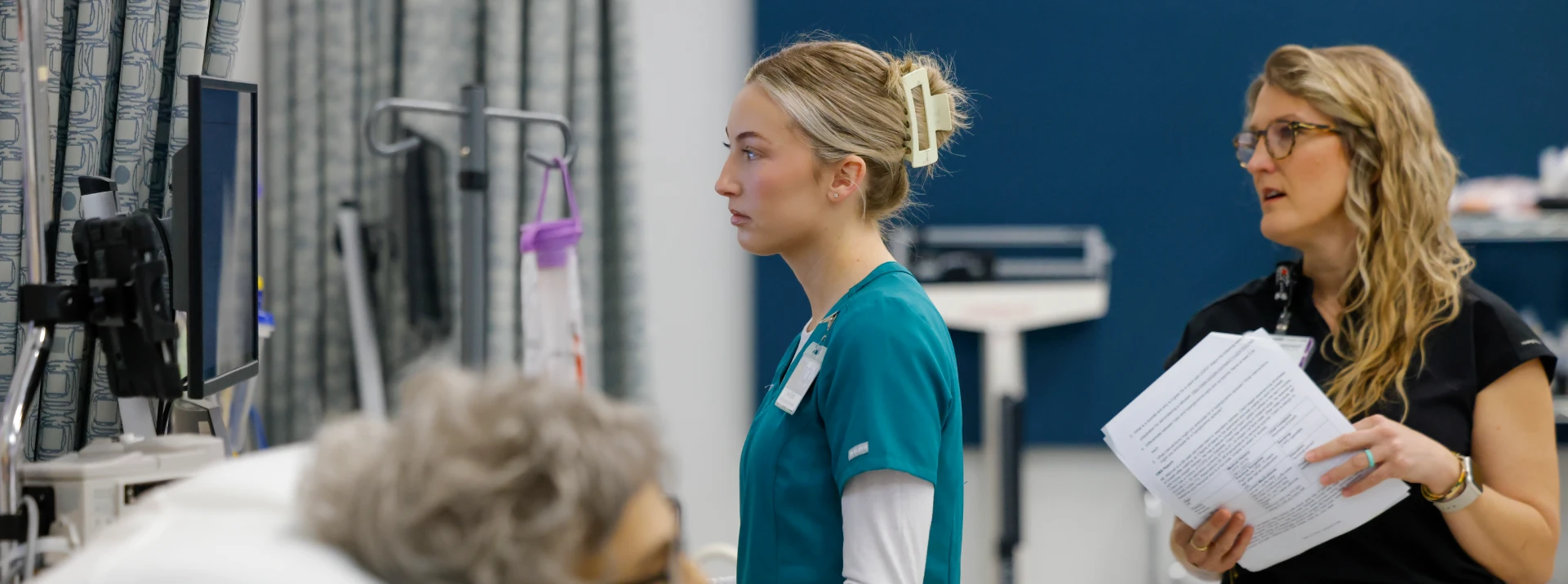


detail page side design thumbnail
small-image

Emergency Medical Science Associate Applied Science Bridge Option (A45340B)

Are you a current Paramedic and looking to complete an Associate of Applied Science (AAS) degree in EMS? If so, our EMS Bridge Program may be exactly what you need. If you hold current Paramedic, BLS, ACLS, PALS, and PHTLS credentials, you can earn up to 48-hours of course credit towards your Emergency Medical Science degree. Students will gain complex knowledge, competency, and experience while employing evidence-based practice under medical oversight and serve as a link from the scene into the healthcare system. Opportunities for personal growth, employment opportunities and promotions could improve by earning your EMS degree. Apply or contact us today to get started.

Paramedic Program Outcomes

CAAHEP Accredited Paramedic Programs and CoAEMSP Letter of Review (LoR) Programs track and report outcome measures annually to the Committee on Accreditation for the Emergency Medical Services Professions (CoAEMSP).

The most current CoAEMSP Annual Report requirement was for the calendar year 2025. The most recent success rate for the North Carolina state cognitive exam on the third take was 100% (calendar year 2025). The most recent positive placement rate for graduates was 100% (calendar year 2025). The most recent retention rate was 78.9% (calendar year 2025), based on one student exiting the program. Positive placement is defined by the CoAEMSP as “Employed full or part-time in a related field and/or continuing his/her education and/or serving in the military.” Positive placement is measured at completion of the program.

2023:

  • Overall Retention rate for the Paramedic program was 85.7%
  • NC State/National Registry Written Exam Pass Rate Success (after 1st attempt) was 100%
  • Job Placement was 100%

2024: 

  • Overall Retention rate for the Paramedic program overall was 87.5%
  • NC State/National Registry Written Exam Pass Rate Success (after 3rd attempt) was 100%
  • Job Placement was 92.9%

2025:

  • Overall Retention rate for the Paramedic program was 78.9% 
  • NC State/National Registry Written Exam Pass Rate Success (after 3rd attempt) was 100%
  • Job Placement was 100%

Minimum Expectations Goal Statement: To prepare Paramedics who are competent in the cognitive (knowledge), psychomotor (skills), and affective (behavior) learning domains to enter the profession.

“The Brunswick Community College Paramedic program holds a letter of review, which is not a caahep accreditation status, but status granted by the committee on accreditation of educational programs for the emergency medical services professions (coaemsp) signifying that a program seeking inital accreditation has demonstrated sufficient compliance with the accreditation standards through the letter of review self study repoty (lssr) and other documentation. However, it is not a guarantee of eventual accreditation.” 

To contact CoAEMSP:
214-703-8445
www.coaemsp.org

Semesters

Saved courses will be emailed to you. Click the ribbon after each title to select.

Class room image
First Fall Semester

Anatomy & Physiology I

This course provides a comprehensive study of the anatomy and physiology of the human body. Topics include body organization, homeostasis, cytology, histology, and the integumentary, skeletal, muscular, and nervous systems and special senses. Upon completion, students should be able to demonstrate an in-depth understanding of principles of anatomy and physiology and their interrelationships. This course has been approved for transfer under the CAA and ICAA as a pre-major and/or elective course requirement for the AA & AS degree.

BIO 168

Prerequisites:

ENG 025

This course provides the skills necessary for success in college English courses. Topics include reading and writing processes and strategies, such as critical thinking, text analysis, idea development, and application of writing conventions. Upon completion, students should be able to analyze readings and produce unified, coherent, well developed paragraphs and essays using appropriate document design and standard written English while developing positive academic habits, learning strategies, and a growth mindset.

Length: 3
Credits: 4
Lecture: 3
Lab: 3

Writing and Inquiry

This course is designed to develop the ability to produce clear writing in a variety of genres and formats using a recursive process. Emphasis includes inquire, analysis, effective use of rhetorical strategies, thesis development, audience awareness, and revision. Upon completion, students should be able to produce unified, coherent, well-developed essays using standard written English. This course has been approved for transfer under the CAA and ICAA as a pre-major and/or general education elective course requirement for the AA, AS or AE degrees. This is a Universal General Education Transfer Component (UGETC) course in English Composition for the AA, AE, and AS degrees.

ENG 111

Prerequisites:

ENG 025

This course provides the skills necessary for success in college English courses. Topics include reading and writing processes and strategies, such as critical thinking, text analysis, idea development, and application of writing conventions. Upon completion, students should be able to analyze readings and produce unified, coherent, well developed paragraphs and essays using appropriate document design and standard written English while developing positive academic habits, learning strategies, and a growth mindset.

Length: 3
Credits: 3
Lecture: 3

EMS Bridging Course

This course covers medical/ethical/legal issues and the spectrum of age-specific emergencies from conception through death required for paramedic certification. Topics include gynecological, obstetrical, neonatal, pediatric, and geriatric emergencies and pharmacological therapeutics. Upon completion, students should be able to recognize and treat age-specific emergencies.

EMS 280

Prerequisites:

EMS 122

This course provides the introductory hospital clinical experience for the paramedic student. Emphasis is placed on mastering fundamental paramedic skills. Upon completion, students should be able to demonstrate competency with fundamental paramedic level skills demonstrate competency at the Advanced EMT skill level.

,

EMS 130

This course introduces the fundamental principles of pharmacology and medication administration and is required for paramedic certification. Topics include medical terminology, pharmacological concepts, weights, measures, drug calculations, vascular access for fluids and medication administration and legislation. Upon completion, students should be able to accurately calculate drug dosages, properly administer medications, and demonstrate general knowledge of pharmacology.

Length: 3
Credits: 4
Lecture: 3
Lab: 3

EMS Management

This course provides clinical experiences in the hospital and/or field. Emphasis is placed on enhancing the students’ skills and abilities in providing advanced-level care. Upon completion, students should be able to demonstrate continued progress in advanced-level patient care.

EMS 235

Prerequisites:

EMS 221

This course provides clinical experiences in the hospital and/or field. Emphasis is placed on increasing the proficiency of students’ skills and abilities in patient assessments and the delivery of care. Upon completion, students should be able to demonstrate continued progress in advanced-level patient care.

Credits: 2
Clinics: 9

Humanities/Fine Arts Elective

HUM 115

This course introduces the use of critical thinking skills in the context of human conflict. Emphasis is placed on evaluating information, problem solving, approaching cross-cultural perspectives, and resolving controversies and dilemmas. Upon completion, students should be able to demonstrate orally and in writing the use of critical thinking skills in the analysis of appropriate texts. This course has been approved for transfer under the CAA and ICAA as a general education course in Humanities & Fine Arts for the AA & AS degrees.

,

PHI 215

This course introduces fundamental issues in philosophy considering the views of classical and contemporary philosophers. Emphasis is placed on knowledge and belief, appearance and reality, determinism and free will, faith and reason, and justice and inequality. Upon completion, students should be able to identify, analyze, and critically evaluate the philosophical components of an issue. This course has been approved for transfer under the CAA and ICAA as a pre-major and/or elective course requirement for the AA, AE, & AS degrees. This is a Universal General Education Transfer Component (UGETC) course in Humanities & Fine Arts for the AA, AE, & AS degrees.

OR

PHI 240

This course introduces theories about the nature and foundations of moral judgments and applications to contemporary moral issues. Emphasis is placed on moral theories such as consequentialism, deontology, and virtue ethics. Upon completion, students should be able to apply various ethical theories to moral issues such as abortion, capital punishment, poverty, war, terrorism, the treatment of animals, and issues arising from new technologies. This course has been approved for transfer under the CAA and ICAA as a pre-major and/or elective course requirement for the AA, AE & AS degrees. This is a Universal General Education Transfer Component (UGETC) course in Humanities & Fine Arts for the AA & AE degrees.

Credit: 3
Semester Total 16
First Spring Semester

Anatomy & Physiology II

This course provides a continuation of the comprehensive study of the anatomy and physiology of the human body. Topics include the endocrine, cardiovascular, lymphatic, respiratory, digestive, urinary, and reproductive systems as well as metabolism, nutrition, acid-base balance, and fluid and electrolyte balance. Upon completion, students should be able to demonstrate an in-depth understanding of principles of anatomy and physiology and their interrelationships. This course has been approved for transfer under the CAA and ICAA as a pre-major and/or elective course requirement for the AA & AS degree.

BIO 169

Prerequisites:

BIO 168

This course provides a comprehensive study of the anatomy and physiology of the human body. Topics include body organization, homeostasis, cytology, histology, and the integumentary, skeletal, muscular, and nervous systems and special senses. Upon completion, students should be able to demonstrate an in-depth understanding of principles of anatomy and physiology and their interrelationships. This course has been approved for transfer under the CAA and ICAA as a pre-major and/or elective course requirement for the AA & AS degree.

, minimum Grade of “C”
Length: 3
Credits: 4
Lecture: 3
Lab: 3

General Psychology

This course provides an overview of the scientific study of human behavior. Topics include history, methodology, biopsychology, sensation, perception, learning, motivation, cognition, abnormal behavior, personality theory, social psychology, and other relevant topics. Upon completion, students should be able to demonstrate a basic knowledge of the science of psychology. This course has been approved for transfer under the CAA and ICAA as a pre-major and/or elective course requirement for the AA, AE, & AS degrees. This is a Universal General Education Transfer Component (UGETC) course in Social & Behavioral Sciences for the AA, AE, & AS degrees.

PSY 150

Prerequisites:

ENG 025

This course provides the skills necessary for success in college English courses. Topics include reading and writing processes and strategies, such as critical thinking, text analysis, idea development, and application of writing conventions. Upon completion, students should be able to analyze readings and produce unified, coherent, well developed paragraphs and essays using appropriate document design and standard written English while developing positive academic habits, learning strategies, and a growth mindset.

Length: 3
Credits: 3
Lecture: 3

Research

ENG 112

This course, the second in a series of two, introduces research techniques, documentation styles, and writing strategies. Emphasis is placed on analyzing information and ideas and incorporating research findings into documented writing and research projects. Upon completion, students should be able to evaluate and synthesize information from primary and secondary sources using documentation appropriate to various disciplines. This course has been approved for transfer under the CAA and ICAA as a pre-major and/or general education elective course requirement for the AA, AS or AE degrees. This is a Universal General Education Transfer Component (UGETC) course in English Composition for the AA, AE, and AS degrees.

OR

ENG 114

This course, the second in a series of two, is designed to teach professional communication skills. Emphasis is placed on research, listening, critical reading and thinking, analysis, interpretation, and design used in oral and written presentations. Upon completion, students should be able to work individually and collaboratively to produce well-designed business and professional written and oral presentations. This course has been approved for transfer under the CAA and ICAA as a general education course in English Composition for the AA & AS degrees.

Credit: 3
Semester Total 10
NOTE: Bridge Program Applicants must have a current and unencumbered North Carolina and/or National Registry Paramedic credentials. Upon admission, entry students will receive advanced standing for EMS 110 with approval from the Program Director.

Advanced EMT

This course introduces basic emergency medical care. Topics include preparatory, airway, patient assessment, medical emergencies, trauma, infants and children, and operations. Upon completion, students should be able to demonstrate the knowledge and skills necessary to achieve North Carolina State or National Registry EMT certification.

EMS 110

Length: 6
Credits: 9
Lecture: 6
Lab: 6
Clinics: 3
Total Credits 9
Credits Awarded
Upon successfully completing EMS 280 with a “C” or better, the student will be awarded credit for prior learning for the following:

EMS Clinical Practicum I

This course provides the hospital and field internship/clinical experiences required in preparation for the Advanced EMT certification. Emphasis is placed on performing patient assessments, treatments, and interactions appropriate at the Advanced EMT level of care. Upon completion, students should be able to demonstrate competency at the Advanced EMT skill level.

EMS 121

Prerequisites:

EMS 110

This course introduces basic emergency medical care. Topics include preparatory, airway, patient assessment, medical emergencies, trauma, infants and children, and operations. Upon completion, students should be able to demonstrate the knowledge and skills necessary to achieve North Carolina State or National Registry EMT certification.

Credits: 2
Clinics: 6

Pharmacology

This course introduces information concerning sources, effects, legalities, and the safe use of medications as therapeutic agents. Emphasis is placed on nursing responsibility, accountability, pharmacokinetics, routes of medication administration, contraindications and side effects. Upon completion, students should be able to compute dosages and administer medication safely.

NUR 117

Prerequisites: Admission to the Practical Nursing Program or Admission to the Associate Degreement in Nursing Program
Length: 1
Credits: 2
Lecture: 1
Lab: 3

Cardiology I

This course introduces the study of cardiovascular emergencies and is required for paramedic certification. Topics include anatomy and physiology, pathophysiology, electrophysiology, and rhythm interpretation. Upon completion, students should be able to recognize and interpret rhythms.

EMS 160

Prerequisites:

EMS 110

This course introduces basic emergency medical care. Topics include preparatory, airway, patient assessment, medical emergencies, trauma, infants and children, and operations. Upon completion, students should be able to demonstrate the knowledge and skills necessary to achieve North Carolina State or National Registry EMT certification.

Credits: 3
Lecture: 2
Lab: 3

Cardiology II

This course provides an in-depth study of cardiovascular emergencies and is required for paramedic certification. Topics include assessment and treatment of cardiac emergencies, cardiac pharmacology, and patient care. Upon completion, students should be able to manage the cardiac patient.

EMS 220

Prerequisites:

EMS 122

This course provides the introductory hospital clinical experience for the paramedic student. Emphasis is placed on mastering fundamental paramedic skills. Upon completion, students should be able to demonstrate competency with fundamental paramedic level skills demonstrate competency at the Advanced EMT skill level.

,

EMS 130

This course introduces the fundamental principles of pharmacology and medication administration and is required for paramedic certification. Topics include medical terminology, pharmacological concepts, weights, measures, drug calculations, vascular access for fluids and medication administration and legislation. Upon completion, students should be able to accurately calculate drug dosages, properly administer medications, and demonstrate general knowledge of pharmacology.

,

EMS 160

This course introduces the study of cardiovascular emergencies and is required for paramedic certification. Topics include anatomy and physiology, pathophysiology, electrophysiology, and rhythm interpretation. Upon completion, students should be able to recognize and interpret rhythms.

Length: 1
Credits: 3
Lecture: 2
Lab: 1

EMS Clinical Practicum II

This course provides clinical experiences in the hospital and/or field. Emphasis is placed on increasing the proficiency of students’ skills and abilities in patient assessments and the delivery of care. Upon completion, students should be able to demonstrate continued progress in advanced-level patient care.

EMS 221

Prerequisites:

EMS 122

This course provides the introductory hospital clinical experience for the paramedic student. Emphasis is placed on mastering fundamental paramedic skills. Upon completion, students should be able to demonstrate competency with fundamental paramedic level skills demonstrate competency at the Advanced EMT skill level.

,

EMS 130

This course introduces the fundamental principles of pharmacology and medication administration and is required for paramedic certification. Topics include medical terminology, pharmacological concepts, weights, measures, drug calculations, vascular access for fluids and medication administration and legislation. Upon completion, students should be able to accurately calculate drug dosages, properly administer medications, and demonstrate general knowledge of pharmacology.

,

EMS 160

This course introduces the study of cardiovascular emergencies and is required for paramedic certification. Topics include anatomy and physiology, pathophysiology, electrophysiology, and rhythm interpretation. Upon completion, students should be able to recognize and interpret rhythms.

Length: 2
Credits: 2
Lecture: 2
Lab: 3

EMS Clinical Practicum III

This course provides clinical experiences in the hospital and/or field. Emphasis is placed on increasing the proficiency of students’ skills and abilities in patient assessments and the delivery of care. Upon completion, students should be able to demonstrate continued progress in advanced-level patient care.

EMS 231

Prerequisites:

EMS 121

This course provides the hospital and field internship/clinical experiences required in preparation for the Advanced EMT certification. Emphasis is placed on performing patient assessments, treatments, and interactions appropriate at the Advanced EMT level of care. Upon completion, students should be able to demonstrate competency at the Advanced EMT skill level.

,

EMS 122

This course provides the introductory hospital clinical experience for the paramedic student. Emphasis is placed on mastering fundamental paramedic skills. Upon completion, students should be able to demonstrate competency with fundamental paramedic level skills demonstrate competency at the Advanced EMT skill level.

Credits: 3
Clinics: 6

Patients w/Special Challenges

This course stresses the principles of managing a modern emergency medical service system. Topics include structure and function of municipal governments, EMS grantsmanship, finance, regulatory agencies, system management, legal issues, and other topics relevant to the EMS manager. Upon completion, students should be able to understand the principles of managing emergency medical service delivery systems.

EMS 240

Length: 2
Credits: 2
Lecture: 2

EMS Clinical Practicum IV

This course includes concepts of crisis intervention and techniques of interacting with patients with special challenges and is required for paramedic certification. Topics include appropriate intervention and interaction for neglected, abused, terminally ill, chronically ill, technology assisted, bariatric, physically challenged, mentally challenged, or assaulted patients as well as behavioral emergencies. Upon completion, students should be able to recognize and manage the care of patients with special challenges.

EMS 241

Prerequisites:

EMS 122

This course provides the introductory hospital clinical experience for the paramedic student. Emphasis is placed on mastering fundamental paramedic skills. Upon completion, students should be able to demonstrate competency with fundamental paramedic level skills demonstrate competency at the Advanced EMT skill level.

,

EMS 130

This course introduces the fundamental principles of pharmacology and medication administration and is required for paramedic certification. Topics include medical terminology, pharmacological concepts, weights, measures, drug calculations, vascular access for fluids and medication administration and legislation. Upon completion, students should be able to accurately calculate drug dosages, properly administer medications, and demonstrate general knowledge of pharmacology.

Length: 1
Credits: 4
Lecture: 1
Lab: 2

Medical Emergencies

This course provides clinical experiences in the hospital and/or field. Emphasis is placed on mastering the skills/competencies required of the paramedic providing advanced-level care. Upon completion, students should be able to provide advanced-level patient care as an entry-level paramedic.

EMS 250

Prerequisites:

EMS 231

This course provides clinical experiences in the hospital and/or field. Emphasis is placed on enhancing the students’ skills and abilities in providing advanced-level care. Upon completion, students should be able to demonstrate continued progress in advanced-level patient care.

Credits: 4
Clinics: 12

Trauma Emergencies

This course provides an in-depth study of medical conditions frequently encountered in the prehospital setting and is required for paramedic certification. Topics include pulmonology, neurology, endocrinology, anaphylaxis, gastroenterology, toxicology, and environmental emergencies integrating case presentation and emphasizing pharmacotherapeutics. Upon completion, students should be able to recognize and manage frequently encountered medical conditions based upon initial patient impression.

EMS 260

Prerequisites:

EMS 122

This course provides the introductory hospital clinical experience for the paramedic student. Emphasis is placed on mastering fundamental paramedic skills. Upon completion, students should be able to demonstrate competency with fundamental paramedic level skills demonstrate competency at the Advanced EMT skill level.

and

EMS 130

This course introduces the fundamental principles of pharmacology and medication administration and is required for paramedic certification. Topics include medical terminology, pharmacological concepts, weights, measures, drug calculations, vascular access for fluids and medication administration and legislation. Upon completion, students should be able to accurately calculate drug dosages, properly administer medications, and demonstrate general knowledge of pharmacology.

Length: 3
Credits: 2
Lecture: 3
Lab: 3

Life Span Emergencies

This course provides in-depth study of trauma including pharmacological interventions for conditions frequently encountered in the prehospital setting and is required for paramedic certification. Topics include an overview of thoracic, abdominal, genitourinary, orthopedic, neurological, and multi-system trauma, soft tissue trauma of the head, neck, and face as well as environmental emergencies. Upon completion, students should be able to recognize and manage trauma situations based upon patient assessment and should adhere to standards of care.

EMS 270

Prerequisites:

EMS 122

This course provides the introductory hospital clinical experience for the paramedic student. Emphasis is placed on mastering fundamental paramedic skills. Upon completion, students should be able to demonstrate competency with fundamental paramedic level skills demonstrate competency at the Advanced EMT skill level.

,

EMS 130

This course introduces the fundamental principles of pharmacology and medication administration and is required for paramedic certification. Topics include medical terminology, pharmacological concepts, weights, measures, drug calculations, vascular access for fluids and medication administration and legislation. Upon completion, students should be able to accurately calculate drug dosages, properly administer medications, and demonstrate general knowledge of pharmacology.

Length: 1
Credits: 4
Lecture: 1
Lab: 3

EMS Capstone

This course provides an opportunity to demonstrate problem-solving skills as a team leader in simulated patient scenarios and is required for paramedic certification. Emphasis is placed on critical thinking, integration of didactic and psychomotor skills, and effective performance in simulated emergency situations. Upon completion, students should be able to recognize and appropriately respond to a variety of EMS-related events.

EMS 285

Length: 2
Credits: 2
Lecture: 2
Lab: 2
Total Credits 33
Total Program Credit 68
BrunswickComCol_WebsiteAsset_FlowerLady_HeadRoom
BrunswickComCol_WebsiteAsset_Mobile_Trophy_HeadRoom

STUDENT STORY

Caroline Bailey

Congratulations to Caroline Bailey for being named as a BCC Student of the Month. “In every way, Caroline represents the best of BCC,” said Instructor Heather Hardie. “She’s a team player, hard worker, and has a heart of gold. Her passion for learning and helping others inspires us all.”

Find your path

Need Help Choosing?

Not sure which program is right for you? Our Success Coaches are here to help.

OneStop Student Services, Building A, Brunswick Community College

(910) 755-7320 | onestop@brunswickcc.edu

Close

TELL US ABOUT YOURSELF.

WHAT INTERESTS YOU? (CHOOSE UP TO 3)

WHAT CREDENTIAL ARE YOU HOPING TO EARN?

In about two years, you can earn an Associate of Arts, Associate of Science, or an Associate of Applied Science degree. Many students continue their education at a four-year college or university.
A diploma takes less time (9-18 months) than a degree and provides you with hands-on training and skills in a specific field. You are workforce ready.
If you want focused training in a specific skill or industry in less than one year, a certificate program may be for you.
In less than six months, you train for employment in a specific field or career type, short-term industry training programs are a great place to start. Some programs offer industry recognized credentials.
High School students can accelerate the completion of college certificates, diplomas, and associate degrees.
Complete a high school credential (GED®) that mirrors a public-school credential.
Prepares adults to take the High School Equivalency Test.

HOW WOULD YOU PREFER TO LEARN?

WHEN WOULD YOU LIKE TO COMPLETE YOUR PROGRAM?

BASED ON YOUR RESPONSES, THESE PROGRAMS MAY BE A GREAT FIT FOR YOU.

Every student's path is different. Explore these recommended programs to learn more about the opportunities available at Brunswick Community College.

Find your pathways and take the next step forward

Wherever you’re starting, we’re here to help you take the next step.

Pathways Wizard is your personal academic navigator—helping you map out the right path to reach your goals and turn confusion into a clear plan forward.