

Turfgrass Management Technology Diploma Image
small-image

Turfgrass Management Technology Diploma (D15420)

The Turfgrass Management Technology curriculum prepares individuals for various careers in horticulture. Classroom instruction and practical laboratory applications of horticulture principles and practices are included in the program of study.

Course work includes plant identification, pest management, plant science and soil science. Also included are courses in sustainable plant production and management, landscaping, and operation of horticulture businesses.

Graduates should qualify for employment in a variety of positions associated with nurseries, garden centers, greenhouses, landscape operations, governmental agencies/parks, golf courses, sports complexes, highway vegetation, turf maintenance companies, and private and public gardens.

Graduates should also be prepared to take the North Carolina Pesticide Applicator’s Examination.

This program focuses on turfgrass and related groundcover plants and prepares individuals to develop ornamental or recreational grasses and related products; plant, transplant, and manage grassed areas; and to produce and store turf used for transplantation. Potential course work includes instruction in applicable plant sciences, genetics of grasses, turf science, use analysis, turf management, and related economics.

Student with Laptop

Semesters

Saved courses will be emailed to you. Click the ribbon after each title to select.

Class room image
First Fall Semester

Writing and Inquiry

This course is designed to develop the ability to produce clear writing in a variety of genres and formats using a recursive process. Emphasis includes inquire, analysis, effective use of rhetorical strategies, thesis development, audience awareness, and revision. Upon completion, students should be able to produce unified, coherent, well-developed essays using standard written English. This course has been approved for transfer under the CAA and ICAA as a pre-major and/or general education elective course requirement for the AA, AS or AE degrees. This is a Universal General Education Transfer Component (UGETC) course in English Composition for the AA, AE, and AS degrees.

ENG 111

Prerequisites:

ENG 025

This course provides the skills necessary for success in college English courses. Topics include reading and writing processes and strategies, such as critical thinking, text analysis, idea development, and application of writing conventions. Upon completion, students should be able to analyze readings and produce unified, coherent, well developed paragraphs and essays using appropriate document design and standard written English while developing positive academic habits, learning strategies, and a growth mindset.

Length: 3
Credits: 3
Lecture: 3

Landscape Construction

This course introduces the design and fabrication of landscape structures/features. Emphasis is placed on safety, tool identification and use, material selection, construction techniques, and fabrication. Upon completion, students should be able to design and construct common landscape structures/features.

HOR 114

Length: 2
Credits: 3
Lecture: 2
Lab: 2

Plant Materials I

This course covers identification, culture, characteristics, and use of plants in a sustainable landscape. Emphasis is placed on nomenclature, identification, growth requirements, cultural requirements, soil preferences, and landscape applications. Upon completion, students should be able to demonstrate knowledge of the proper selection and utilization of plant materials, including natives and invasive plants.

HOR 160

Length: 2
Credits: 3
Lecture: 2
Lab: 2

Applied Plant Science

This course introduces the basic concepts of botany as they apply to horticulture. Topics include nomenclature, physiology, morphology, and anatomy as they apply to plant culture. Upon completion, students should be able to apply the basic principles of botany to horticulture.

HOR 162

Length: 2
Credits: 3
Lecture: 2
Lab: 2

Introduction to Turfgrass Cultures & ID

This course covers the principles of reproduction, growth development, species characteristics, establishment and maintenance of golf courses and sports fields, and lawns. Topics include principles of reproduction, growth development, species characteristics, establishment and maintenance of golf courses and sports fields, and lawn applications. Upon completion, students should be able to identify turfgrass species and develop an establishment and maintenance plan for high quality turf areas in accordance with sustainable practices.

TRF 110

Length: 3
Credits: 3
Lecture: 3
Lab: 2
Semester Total 15
First Spring Semester

Horticulture Pest Management

This course covers the identification and control of plant pests including insects, diseases, and weeds. Topics include pest identification and chemical regulations, safety, and pesticide applications. Upon completion, students should be able to meet the requirements for North Carolina Commercial Pesticide Grounds Applicators license.

HOR 164

Length: 2
Credits: 3
Lecture: 2
Lab: 2

Soils & Fertilizers

This course covers the physical and chemical properties of soils and soil fertility and management. Topics include soil formation; classification; physical, chemical, and biological properties (including microorganisms); testing; and fertilizer application. Upon completion, students should be able to analyze, evaluate, and properly amend soils/media according to sustainable practices.

HOR 166

Length: 2
Credits: 3
Lecture: 2
Lab: 2
Semester Total 6
First Summer Semester

Math Measurement & Literacy

This course is designed to provide communication skills, basic education principles, and knowledge of available community resources and to apply this knowledge to the clinical setting. Emphasis is placed on identifying appropriate community resources, developing patient education materials, and perfecting written and oral communication skills. Upon completion, students should be able to instruct, communicate effectively, and act as a liaison between the patient and community agencies.

MAT 110

Length: 1
Credits: 3
Lecture: 1
Lab: 2
Semester Total 3
Second Fall Semester

Turfgrass Irrigation & Design

This course covers the basic techniques involved in the design, layout, installation, and use of water- wise turfgrass irrigation systems. Topics include types of irrigation systems, components of the systems, materials available for use, and economic considerations. Upon completion, students should be able to complete a functional design for a turfgrass irrigation system according to sustainable practices

TRF 120

Length: 2
Credits: 4
Lecture: 2
Lab: 4

Landscape Maintenance

This course introduces the tasks of landscape maintenance. Emphasis is placed on lawns, shrubs, trees, flowers, and ground covers. Upon completion, students should be able to maintain a landscape area on a year-round schedule.

TRF 152

Length: 2
Credits: 3
Lecture: 2
Lab: 2

Turfgrass Management Applications

This course introduces specific sports field design, installation, and maintenance. Topics include natural grass croquet courts and baseball, soccer, and football fields. Upon completion, students should be able to perform specific tasks in layout, field marking, and preparing for tournament play.

TRF 230

Length: 1
Credits: 3
Lecture: 1
Lab: 2
Semester Total 10
Second Spring Semester

Turfgrass Equipment Management

This course covers the operation and maintenance of specialized turfgrass management equipment. Topics include small engine use and repair; operation, maintenance, and repair of turfgrass management equipment; organization of shop areas; and safety considerations. Upon completion, students should be able to operate and maintain turfgrass management equipment.

TRF 210

Length: 1
Credits: 3
Lecture: 1
Lab: 4

Advanced Turfgrass Management

This course covers the principles and practices involved in turfgrass management. Topics include choosing the best management practice in mowing, pest control, fertilization, irrigation, traffic control, air control, budgeting, and materials procurement. Upon completion, students should be able to demonstrate knowledge of the principles covered and select and apply the best practices in turfgrass management.

TRF 260

Prerequisites:

TRF 110

This course covers the principles of reproduction, growth development, species characteristics, establishment and maintenance of golf courses and sports fields, and lawns. Topics include principles of reproduction, growth development, species characteristics, establishment and maintenance of golf courses and sports fields, and lawn applications. Upon completion, students should be able to identify turfgrass species and develop an establishment and maintenance plan for high quality turf areas in accordance with sustainable practices.

Length: 3
Credits: 4
Lecture: 3
Lab: 2
Semester Total 7
Total Program Credit 41

Start your Path

Bring your goal to life

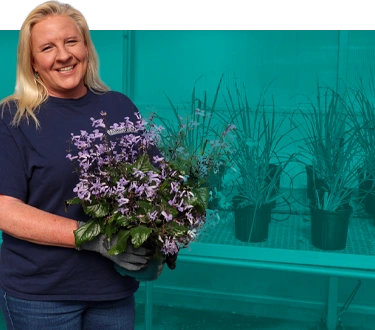
BrunswickComCol_WebsiteAsset_FlowerLady_HeadRoom
BrunswickComCol_WebsiteAsset_Mobile_Trophy_HeadRoom

STUDENT STORY

Caroline Bailey

Congratulations to Caroline Bailey for being named as a BCC Student of the Month. “In every way, Caroline represents the best of BCC,” said Instructor Heather Hardie. “She’s a team player, hard worker, and has a heart of gold. Her passion for learning and helping others inspires us all.”

Find your path

Need Help Choosing?

Not sure which program is right for you? Our Success Coaches are here to help.

OneStop Student Services, Building A, Brunswick Community College

(910) 755-7320 | onestop@brunswickcc.edu

Close

TELL US ABOUT YOURSELF.

WHAT INTERESTS YOU? (CHOOSE UP TO 3)

WHAT CREDENTIAL ARE YOU HOPING TO EARN?

In about two years, you can earn an Associate of Arts, Associate of Science, or an Associate of Applied Science degree. Many students continue their education at a four-year college or university.
A diploma takes less time (9-18 months) than a degree and provides you with hands-on training and skills in a specific field. You are workforce ready.
If you want focused training in a specific skill or industry in less than one year, a certificate program may be for you.
In less than six months, you train for employment in a specific field or career type, short-term industry training programs are a great place to start. Some programs offer industry recognized credentials.
High School students can accelerate the completion of college certificates, diplomas, and associate degrees.
Complete a high school credential (GED®) that mirrors a public-school credential.
Prepares adults to take the High School Equivalency Test.

HOW WOULD YOU PREFER TO LEARN?

WHEN WOULD YOU LIKE TO COMPLETE YOUR PROGRAM?

BASED ON YOUR RESPONSES, THESE PROGRAMS MAY BE A GREAT FIT FOR YOU.

Every student's path is different. Explore these recommended programs to learn more about the opportunities available at Brunswick Community College.

Find your pathways and take the next step forward

Wherever you’re starting, we’re here to help you take the next step.

Pathways Wizard is your personal academic navigator—helping you map out the right path to reach your goals and turn confusion into a clear plan forward.