Cosmetology Associate in Applied Science Degree (A55140)

The Cosmetology curriculum is designed to provide competency-based knowledge, scientific/artistic principles, and hands-on fundamentals associated with the cosmetology industry. The curriculum provides a simulated salon environment that enables students to develop manipulative skills.

Coursework includes instruction in all phases of professional imaging, hair design, chemical processes, skin care, nail care, multi-cultural practices, business/computer principles, product knowledge, and other selected topics.

Graduates should qualify to sit for the State Board of Cosmetic Arts examination. Upon successfully passing the State Board exam, graduates will be issued a license. Employment is available in beauty salons and related businesses.

BCC also offers Cosmetology Diploma and Certificate  options.

Semesters

Saved courses will be emailed to you. Click the ribbon after each title to select.

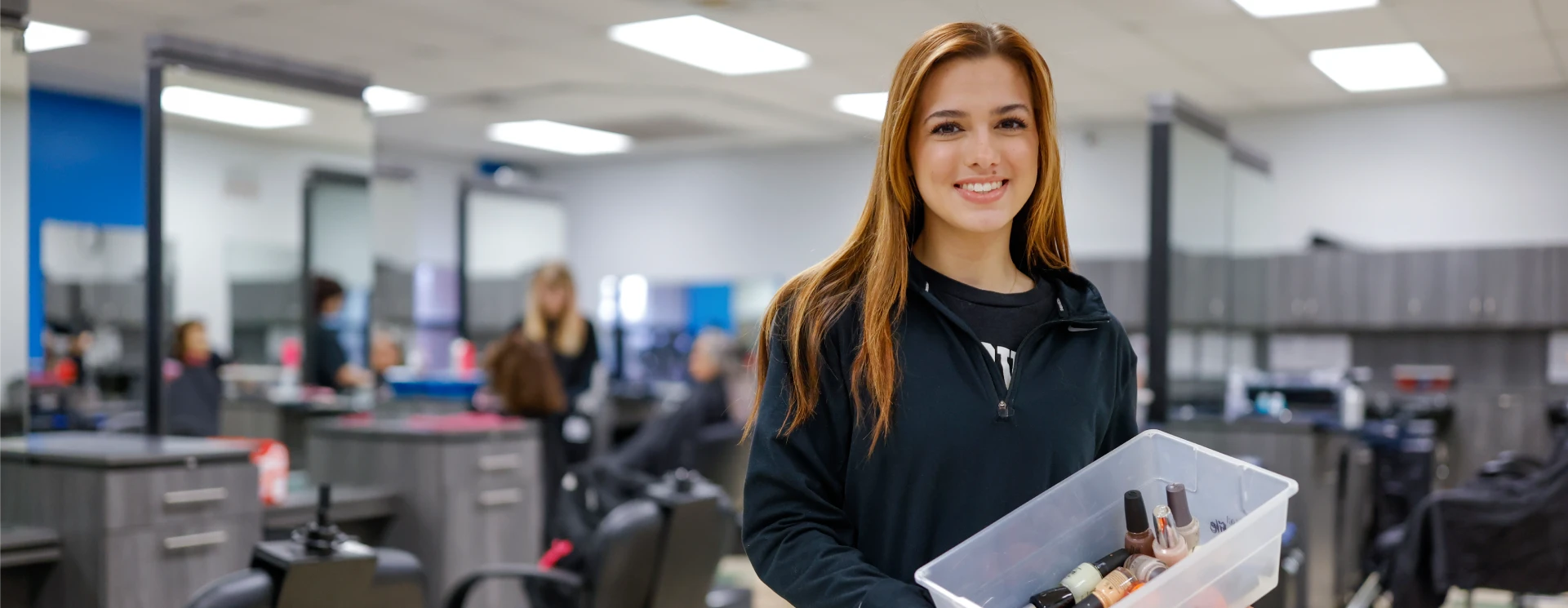
Class room image
First Fall Semester

Transfer and Career Success

This course provides information and strategies necessary to develop clear academic and professional goals beyond the community college experience. Topics include the CAA, college policies and culture, career exploration, gathering information on senior institutions, strategic planning, critical thinking, and communications skills for a successful academic transition. Upon completion, students should be able to develop an academic plan to transition successfully to senior institutions. This course has been approved for transfer under the CAA and ICAA as a pre-major and/or elective course requirement for the AA, AE, & AS degrees.

ACA 122

Credits: 1
Lab: 2

Cosmetology Concepts I

This course introduces basic cosmetology concepts. Topics include safety, first aid, sanitation, bacteriology, anatomy, diseases and disorders, hygiene, product knowledge, chemistry, ethics, manicures, and other related topics. Upon completion, students should be able to safely and competently apply cosmetology concepts in the salon setting.

COS 111

Corequisites:

COS 112

This course introduces basic salon services. Topics include scalp treatments, shampooing, rinsing, hair color, design, haircutting, permanent waving, pressing, relaxing, wigs, and other related topics. Upon completion, students should be able to safely and competently demonstrate salon services.

Length: 4
Credits: 4
Lecture: 4

Writing and Inquiry

This course is designed to develop the ability to produce clear writing in a variety of genres and formats using a recursive process. Emphasis includes inquire, analysis, effective use of rhetorical strategies, thesis development, audience awareness, and revision. Upon completion, students should be able to produce unified, coherent, well-developed essays using standard written English. This course has been approved for transfer under the CAA and ICAA as a pre-major and/or general education elective course requirement for the AA, AS or AE degrees. This is a Universal General Education Transfer Component (UGETC) course in English Composition for the AA, AE, and AS degrees.

ENG 111

Prerequisites:

ENG 025

This course provides the skills necessary for success in college English courses. Topics include reading and writing processes and strategies, such as critical thinking, text analysis, idea development, and application of writing conventions. Upon completion, students should be able to analyze readings and produce unified, coherent, well developed paragraphs and essays using appropriate document design and standard written English while developing positive academic habits, learning strategies, and a growth mindset.

Length: 3
Credits: 3
Lecture: 3

Salon I

This course introduces basic salon services. Topics include scalp treatments, shampooing, rinsing, hair color, design, haircutting, permanent waving, pressing, relaxing, wigs, and other related topics. Upon completion, students should be able to safely and competently demonstrate salon services.

COS 112

Corequisites:

COS 111

This course introduces basic cosmetology concepts. Topics include safety, first aid, sanitation, bacteriology, anatomy, diseases and disorders, hygiene, product knowledge, chemistry, ethics, manicures, and other related topics. Upon completion, students should be able to safely and competently apply cosmetology concepts in the salon setting.

Credits: 8
Lab: 24
Semester Total 16
First Spring Semester

Cosmetology Concepts II

This course covers more comprehensive cosmetology concepts. Topics include safety, product knowledge, chemistry, manicuring, chemical restructuring, and hair coloring. Upon completion, students should be able to safely and competently apply these cosmetology concepts in the salon setting.

COS 113

Prerequisites:

COS 111AB

This course introduces basic cosmetology concepts. Topics include safety, first aid, sanitation, bacteriology, anatomy, diseases and disorders, hygiene, product knowledge, chemistry, ethics, manicures, and other related topics. Upon completion, students should be able to safely and competently apply cosmetology concepts in the salon setting.

,

COS 112AB

This course introduces basic salon services. Topics include scalp treatments, shampooing, rinsing, hair color, design, haircutting, permanent waving, pressing, relaxing, wigs, and other related topics. Upon completion, students should be able to safely and competently demonstrate salon services.

Length: 1
Credits: 4
Lecture: 1

Salon II

This course provides experience in a simulated salon setting. Topics include basic skin care, manicuring, nail application, scalp treatments, shampooing, rinsing, hair color, design, haircutting, chemical restructuring, pressing, wigs, and other related topics. Upon completion, students should be able to safely and competently demonstrate these salon services.

COS 114

Prerequisites:

COS 111

This course introduces basic cosmetology concepts. Topics include safety, first aid, sanitation, bacteriology, anatomy, diseases and disorders, hygiene, product knowledge, chemistry, ethics, manicures, and other related topics. Upon completion, students should be able to safely and competently apply cosmetology concepts in the salon setting.

and

COS 112

This course introduces basic salon services. Topics include scalp treatments, shampooing, rinsing, hair color, design, haircutting, permanent waving, pressing, relaxing, wigs, and other related topics. Upon completion, students should be able to safely and competently demonstrate salon services.

Credits: 8
Lab: 24

Introduction to Interpersonal Communication

This course introduces the practices and principles of interpersonal communication in both dyadic and group settings. Emphasis is placed on the communication process, perception, listening, self- disclosure, speech apprehension, ethics, nonverbal communication, conflict, power, and dysfunctional communication relationships. Upon completion, students should be able to demonstrate interpersonal communication skills, apply basic principles of group discussion, and manage conflict in interpersonal communication situations. This course has been approved for transfer under the CAA and ICAA as a general education course in Communications for the AA & AS degrees.

COM 120

Length: 3
Credits: 3
Lecture: 3
Semester Total 15
First Summer Semester

Contemporary Hair Coloring

This course covers basic color concepts, hair coloring problems, and application techniques. Topics include color theory, terminology, contemporary techniques, product knowledge, and other related topics. Upon completion, students should be able to identify a client’s color needs and safely and competently perform color applications and correct problems.

COS 223

Prerequisites:

COS 111

This course introduces basic cosmetology concepts. Topics include safety, first aid, sanitation, bacteriology, anatomy, diseases and disorders, hygiene, product knowledge, chemistry, ethics, manicures, and other related topics. Upon completion, students should be able to safely and competently apply cosmetology concepts in the salon setting.

,

COS 112

This course introduces basic salon services. Topics include scalp treatments, shampooing, rinsing, hair color, design, haircutting, permanent waving, pressing, relaxing, wigs, and other related topics. Upon completion, students should be able to safely and competently demonstrate salon services.

,

COS 115

This course covers more comprehensive cosmetology concepts. Topics include safety, product knowledge, salon management, salesmanship, skin care, electricity/light therapy, wigs, thermal hair styling, lash and brow tinting, superfluous hair removal, and other related topics. Upon completion, students should be able to safely and competently apply these cosmetology concepts in the salon setting.

, and

COS 116

This course provides comprehensive experience in a simulated salon setting. Emphasis is placed on intermediate-level of skin care, manicuring, scalp treatments, shampooing, hair color, design, haircutting, chemical restructuring, pressing, and other related topics. Upon completion, students should be able to safely and competently demonstrate these salon services.

Length: 1
Credits: 2
Lecture: 1
Lab: 3

Trichology & Chemistry

This course is a study of hair and the interaction of applied chemicals. Emphasis is placed on pH actions and the reactions and effects of chemical ingredients. Upon completion, students should be able to demonstrate an understanding of chemical terminology, pH testing, and chemical reactions on hair.

COS 224

Prerequisites:

COS 111

This course introduces basic cosmetology concepts. Topics include safety, first aid, sanitation, bacteriology, anatomy, diseases and disorders, hygiene, product knowledge, chemistry, ethics, manicures, and other related topics. Upon completion, students should be able to safely and competently apply cosmetology concepts in the salon setting.

and

COS 112

This course introduces basic salon services. Topics include scalp treatments, shampooing, rinsing, hair color, design, haircutting, permanent waving, pressing, relaxing, wigs, and other related topics. Upon completion, students should be able to safely and competently demonstrate salon services.

Length: 1
Credits: 2
Lecture: 1
Lab: 3

Math Measurement & Literacy

This course is designed to provide communication skills, basic education principles, and knowledge of available community resources and to apply this knowledge to the clinical setting. Emphasis is placed on identifying appropriate community resources, developing patient education materials, and perfecting written and oral communication skills. Upon completion, students should be able to instruct, communicate effectively, and act as a liaison between the patient and community agencies.

MAT 110

Length: 1
Credits: 3
Lecture: 1
Lab: 2
Semester Total 7
Second Fall Semester

Cosmetology Concepts III

This course covers more comprehensive cosmetology concepts. Topics include safety, product knowledge, salon management, salesmanship, skin care, electricity/light therapy, wigs, thermal hair styling, lash and brow tinting, superfluous hair removal, and other related topics. Upon completion, students should be able to safely and competently apply these cosmetology concepts in the salon setting.

COS 115

Prerequisites:

COS 111

This course introduces basic cosmetology concepts. Topics include safety, first aid, sanitation, bacteriology, anatomy, diseases and disorders, hygiene, product knowledge, chemistry, ethics, manicures, and other related topics. Upon completion, students should be able to safely and competently apply cosmetology concepts in the salon setting.

and

COS 112

This course introduces basic salon services. Topics include scalp treatments, shampooing, rinsing, hair color, design, haircutting, permanent waving, pressing, relaxing, wigs, and other related topics. Upon completion, students should be able to safely and competently demonstrate salon services.

Length: 4
Credits: 4
Lecture: 4

Salon III

This course provides comprehensive experience in a simulated salon setting. Emphasis is placed on intermediate-level of skin care, manicuring, scalp treatments, shampooing, hair color, design, haircutting, chemical restructuring, pressing, and other related topics. Upon completion, students should be able to safely and competently demonstrate these salon services.

COS 116

Prerequisites:

COS 111

This course introduces basic cosmetology concepts. Topics include safety, first aid, sanitation, bacteriology, anatomy, diseases and disorders, hygiene, product knowledge, chemistry, ethics, manicures, and other related topics. Upon completion, students should be able to safely and competently apply cosmetology concepts in the salon setting.

and

COS 112

This course introduces basic salon services. Topics include scalp treatments, shampooing, rinsing, hair color, design, haircutting, permanent waving, pressing, relaxing, wigs, and other related topics. Upon completion, students should be able to safely and competently demonstrate salon services.

Credits: 4
Lab: 12

General Psychology

This course provides an overview of the scientific study of human behavior. Topics include history, methodology, biopsychology, sensation, perception, learning, motivation, cognition, abnormal behavior, personality theory, social psychology, and other relevant topics. Upon completion, students should be able to demonstrate a basic knowledge of the science of psychology. This course has been approved for transfer under the CAA and ICAA as a pre-major and/or elective course requirement for the AA, AE, & AS degrees. This is a Universal General Education Transfer Component (UGETC) course in Social & Behavioral Sciences for the AA, AE, & AS degrees.

PSY 150

Prerequisites:

ENG 025

This course provides the skills necessary for success in college English courses. Topics include reading and writing processes and strategies, such as critical thinking, text analysis, idea development, and application of writing conventions. Upon completion, students should be able to analyze readings and produce unified, coherent, well developed paragraphs and essays using appropriate document design and standard written English while developing positive academic habits, learning strategies, and a growth mindset.

Length: 3
Credits: 3
Lecture: 3

BUS 240

This course introduces contemporary and controversial ethical issues that face the business community. Topics include moral reasoning, moral dilemmas, law and morality, equity, justice and fairness, ethical standards, and moral development. Upon completion, students should be able to demonstrate an understanding of their moral responsibilities and obligations as members of the workforce and society.

OR

BUS 115

This course introduces the student to the legal and ethical framework of business. Contracts, negotiable instruments, the law of sales, torts, crimes, constitutional law, the Uniform Commercial Code, and the court systems are examined. Upon completion, the student should be able to identify legal and ethical issues that may arise in business decisions and the laws that apply to them. This course has been approved for transfer under the CAA and ICAA as a pre-major and/or elective course requirement for the AA & AS degrees.

Credit: 3
Semester Total 14
Second Spring Semester

Cosmetology Concepts IV

This course covers advanced cosmetology concepts. Topics include chemistry and hair structure, advanced cutting and design, and an overview of all cosmetology concepts in preparation for the licensing examination. Upon completion, students should be able to demonstrate an understanding of these cosmetology concepts and meet program completion requirements.

COS 117

Prerequisites:

COS 111

This course introduces basic cosmetology concepts. Topics include safety, first aid, sanitation, bacteriology, anatomy, diseases and disorders, hygiene, product knowledge, chemistry, ethics, manicures, and other related topics. Upon completion, students should be able to safely and competently apply cosmetology concepts in the salon setting.

,

COS 112

This course introduces basic salon services. Topics include scalp treatments, shampooing, rinsing, hair color, design, haircutting, permanent waving, pressing, relaxing, wigs, and other related topics. Upon completion, students should be able to safely and competently demonstrate salon services.

,

COS 113

This course covers more comprehensive cosmetology concepts. Topics include safety, product knowledge, chemistry, manicuring, chemical restructuring, and hair coloring. Upon completion, students should be able to safely and competently apply these cosmetology concepts in the salon setting.

,

COS 114

This course provides experience in a simulated salon setting. Topics include basic skin care, manicuring, nail application, scalp treatments, shampooing, rinsing, hair color, design, haircutting, chemical restructuring, pressing, wigs, and other related topics. Upon completion, students should be able to safely and competently demonstrate these salon services.

,

COS 115

This course covers more comprehensive cosmetology concepts. Topics include safety, product knowledge, salon management, salesmanship, skin care, electricity/light therapy, wigs, thermal hair styling, lash and brow tinting, superfluous hair removal, and other related topics. Upon completion, students should be able to safely and competently apply these cosmetology concepts in the salon setting.

, and

COS 116

This course provides comprehensive experience in a simulated salon setting. Emphasis is placed on intermediate-level of skin care, manicuring, scalp treatments, shampooing, hair color, design, haircutting, chemical restructuring, pressing, and other related topics. Upon completion, students should be able to safely and competently demonstrate these salon services.

Corequisites:

COS 118

This course provides advanced experience in a simulated salon setting. Emphasis is placed on efficient and competent delivery of all salon services in preparation for the licensing examination and employment. Upon completion, students should be able to demonstrate competence in program requirements and the areas covered on the Cosmetology Licensing Examination and meet entry-level employment requirements.

Length: 2
Credits: 2
Lecture: 2

Salon IV

This course provides advanced experience in a simulated salon setting. Emphasis is placed on efficient and competent delivery of all salon services in preparation for the licensing examination and employment. Upon completion, students should be able to demonstrate competence in program requirements and the areas covered on the Cosmetology Licensing Examination and meet entry-level employment requirements.

COS 118

Prerequisites:

COS 111

This course introduces basic cosmetology concepts. Topics include safety, first aid, sanitation, bacteriology, anatomy, diseases and disorders, hygiene, product knowledge, chemistry, ethics, manicures, and other related topics. Upon completion, students should be able to safely and competently apply cosmetology concepts in the salon setting.

,

COS 112

This course introduces basic salon services. Topics include scalp treatments, shampooing, rinsing, hair color, design, haircutting, permanent waving, pressing, relaxing, wigs, and other related topics. Upon completion, students should be able to safely and competently demonstrate salon services.

,

COS 113

This course covers more comprehensive cosmetology concepts. Topics include safety, product knowledge, chemistry, manicuring, chemical restructuring, and hair coloring. Upon completion, students should be able to safely and competently apply these cosmetology concepts in the salon setting.

,

COS 114

This course provides experience in a simulated salon setting. Topics include basic skin care, manicuring, nail application, scalp treatments, shampooing, rinsing, hair color, design, haircutting, chemical restructuring, pressing, wigs, and other related topics. Upon completion, students should be able to safely and competently demonstrate these salon services.

,

COS 115

This course covers more comprehensive cosmetology concepts. Topics include safety, product knowledge, salon management, salesmanship, skin care, electricity/light therapy, wigs, thermal hair styling, lash and brow tinting, superfluous hair removal, and other related topics. Upon completion, students should be able to safely and competently apply these cosmetology concepts in the salon setting.

, and

COS 116

This course provides comprehensive experience in a simulated salon setting. Emphasis is placed on intermediate-level of skin care, manicuring, scalp treatments, shampooing, hair color, design, haircutting, chemical restructuring, pressing, and other related topics. Upon completion, students should be able to safely and competently demonstrate these salon services.

Corequisites:

COS 117

This course covers advanced cosmetology concepts. Topics include chemistry and hair structure, advanced cutting and design, and an overview of all cosmetology concepts in preparation for the licensing examination. Upon completion, students should be able to demonstrate an understanding of these cosmetology concepts and meet program completion requirements.

Credits: 7
Lab: 21

Critical Thinking

This course introduces the use of critical thinking skills in the context of human conflict. Emphasis is placed on evaluating information, problem solving, approaching cross-cultural perspectives, and resolving controversies and dilemmas. Upon completion, students should be able to demonstrate orally and in writing the use of critical thinking skills in the analysis of appropriate texts. This course has been approved for transfer under the CAA and ICAA as a general education course in Humanities & Fine Arts for the AA & AS degrees.

HUM 115

Length: 3
Credits: 3
Lecture: 3
Semester Total 12
Total Program Credit 64

Start your Path

Bring your goal to life
BrunswickComCol_WebsiteAsset_FlowerLady_HeadRoom
BrunswickComCol_WebsiteAsset_Mobile_Trophy_HeadRoom

STUDENT STORY

Caroline Bailey

Congratulations to Caroline Bailey for being named as a BCC Student of the Month. “In every way, Caroline represents the best of BCC,” said Instructor Heather Hardie. “She’s a team player, hard worker, and has a heart of gold. Her passion for learning and helping others inspires us all.”

Find your path

Need Help Choosing?

Not sure which program is right for you? Our Success Coaches are here to help.

OneStop Student Services, Building A, Brunswick Community College

(910) 755-7320 | onestop@brunswickcc.edu

Close

TELL US ABOUT YOURSELF.

WHAT INTERESTS YOU? (CHOOSE UP TO 3)

WHAT CREDENTIAL ARE YOU HOPING TO EARN?

In about two years, you can earn an Associate of Arts, Associate of Science, or an Associate of Applied Science degree. Many students continue their education at a four-year college or university.
A diploma takes less time (9-18 months) than a degree and provides you with hands-on training and skills in a specific field. You are workforce ready.
If you want focused training in a specific skill or industry in less than one year, a certificate program may be for you.
In less than six months, you train for employment in a specific field or career type, short-term industry training programs are a great place to start. Some programs offer industry recognized credentials.
High School students can accelerate the completion of college certificates, diplomas, and associate degrees.
Complete a high school credential (GED®) that mirrors a public-school credential.
Prepares adults to take the High School Equivalency Test.

HOW WOULD YOU PREFER TO LEARN?

WHEN WOULD YOU LIKE TO COMPLETE YOUR PROGRAM?

BASED ON YOUR RESPONSES, THESE PROGRAMS MAY BE A GREAT FIT FOR YOU.

Every student's path is different. Explore these recommended programs to learn more about the opportunities available at Brunswick Community College.

Find your pathways and take the next step forward

Wherever you’re starting, we’re here to help you take the next step.

Pathways Wizard is your personal academic navigator—helping you map out the right path to reach your goals and turn confusion into a clear plan forward.